
UK Online Racecard: The Complete Guide to Reading Horse Racing Cards
Best Horse Racing Betting Sites – Bet on Horse Racing in 2026
 Available in US
Every runner. Every stat. One card to read them all.
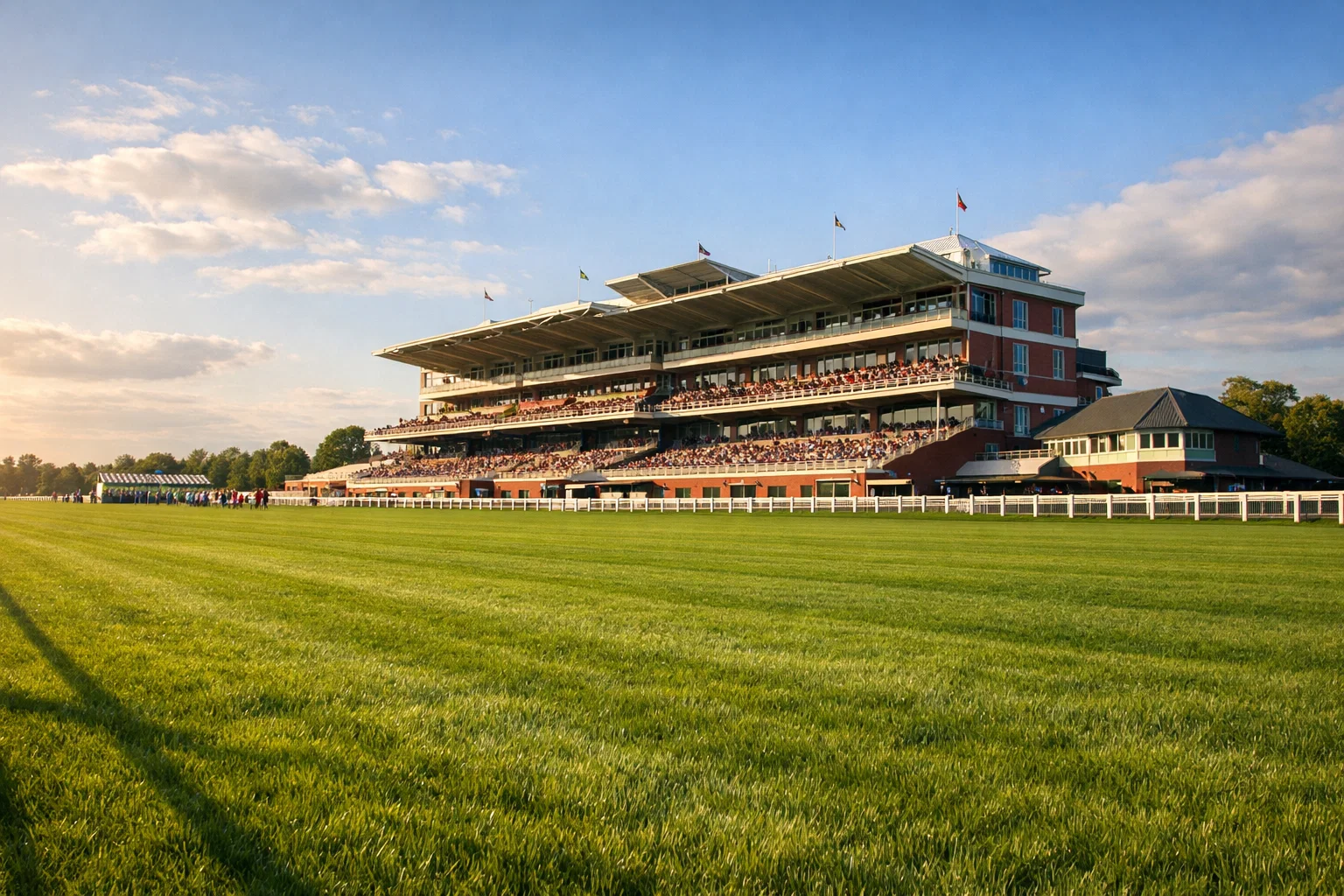
British horse racing runs across 59 racecourses, from the tight amphitheatre of Chester to the sweeping straights of Newmarket, and every race staged at every one of them begins with the same document: the racecard. It is the single sheet — physical or digital — that connects horse, jockey, trainer, owner, punter and casual spectator to the same set of facts. A UK online racecard lists the runners and riders, their recent form, the weight each horse carries, the going, the draw, the odds and a handful of abbreviations that look like gibberish until someone explains them. This guide does exactly that.
The scale of the sport behind that card is considerable. In 2025, British racecourses attracted 5,031,640 visitors — the first time annual attendance exceeded five million since 2019. The industry supports approximately 85,000 jobs, from stable staff at dawn to stewards calling the result at dusk. Whether those people study a racecard on a phone screen or scribble notes on a printed programme, they are all reading the same underlying data. The difference between a profitable day and an expensive one often comes down to how well they read it.
This article walks through every major element of a UK racecard. It covers form figures — the compressed history of a horse's career — and the going scale that tells you how the ground will ride. It explains the handicap system, the abbreviations that pepper every card, and the practical question of where to find reliable racecards online. Each section is written for the intelligent newcomer: someone who wants to understand the card rather than just glance at it. If you already know what C, D and BF mean, the data and context here should still sharpen your reading. If you don't, you will by the end.
What Every Racecard Tells You Before the Tape Goes Up
- A UK online racecard is the definitive pre-race document covering runners, form, going, weights, draw and odds across all 59 British racecourses.
- Form figures — read left to right, most recent run on the far right — compress a horse's entire competitive history into a single line of numbers and letters; favourites win roughly 30-35% of races overall, but just 26-27% in handicaps.
- Going (ground conditions) and draw (stall position) are statistically significant: favourites on firm ground win 1.14 times more often than on good, and low draws at Chester account for 28% of sprint wins.
- Total prize money hit a record £194.7 million in 2025, while the horse population continues to shrink — context that shapes the quality and competitiveness of every card you read.
- Free racecards are available from Racing Post, Sky Sports Racing, Sporting Life and several bookmaker sites, updated from overnight declarations through to the off.
What Is a Racecard and Why It Matters
A racecard is the official document published for every scheduled race at a licensed British racecourse. It lists the confirmed runners and riders, their recent form, the conditions of the race — distance, class, going, prize money — and the weight each horse is set to carry. In its simplest form, the card tells you who is running, under what terms, and with what history. Everything a punter, owner, trainer or broadcaster needs to assess a race starts here.
The distinction between a racecard and a form guide matters more than most newcomers realise. A racecard is the factual, regulatory document: the names, numbers and conditions as declared to the British Horseracing Authority. A form guide layers analysis on top — speed ratings, tipster selections, sectional times, commentary. Think of the racecard as the census and the form guide as the editorial. Both are useful, but the card is the foundation. Without accurate declarations data, no amount of analysis has a leg to stand on.

Publication of declarations is a regulatory requirement. Under BHA rules, trainers confirm entries at specific stages — the five-day entry, the 48-hour confirmation, and the final declaration on the morning of the race (typically by 10:00 a.m.). Each stage narrows the field, and the racecard updates accordingly. Non-runners, jockey changes and headgear additions can all shift between declarations, which is why the card you see the night before is not always the card you see on race day.
The economic context behind every racecard is substantial. The British racing industry contributes an estimated £4.1 billion to the national economy annually, factoring in direct revenue, employment and induced spending. Total prize money in 2025 reached a record £194.7 million, funded by a combination of the Horserace Betting Levy Board (£63.3 million), racecourse contributions (£103.3 million) and owner entry fees (£26.8 million). These are not abstract numbers — they flow directly into the quality of racing that appears on the card. Higher prize money attracts better horses, which produces more competitive fields, which makes the racecard a richer document to read.
"We wanted to make our best racing better and use that as our tool to grow interest in the sport. Part of that was making the racing as good as we could, so we invested in the racing and we have seen a real upside on that" — Richard Wayman, Director of Racing, BHA. That investment is visible on Premier Racedays, where field sizes now average 11.02 runners on the Flat — considerably higher than the overall average. For the racecard reader, a larger field means more data to process, more form to compare and, frankly, more interesting puzzles to solve.
A form guide can vary between providers. The racecard, at its core, does not. It is the common language of the racecourse. Whether you are standing in the pre-parade ring at Cheltenham with a folded programme or scrolling through an app on the sofa, the card tells you the same thing: here are the facts. What you do with them is your business.
Racecard Anatomy at a Glance
Open any UK online racecard and you will see the same basic architecture, regardless of the platform. The layout varies cosmetically — Racing Post uses a different colour scheme from Sky Sports Racing, Betfair's exchange card has columns a traditional bookmaker's card does not — but the underlying structure follows a consistent pattern. Understanding that structure is the first step toward reading the card with purpose.
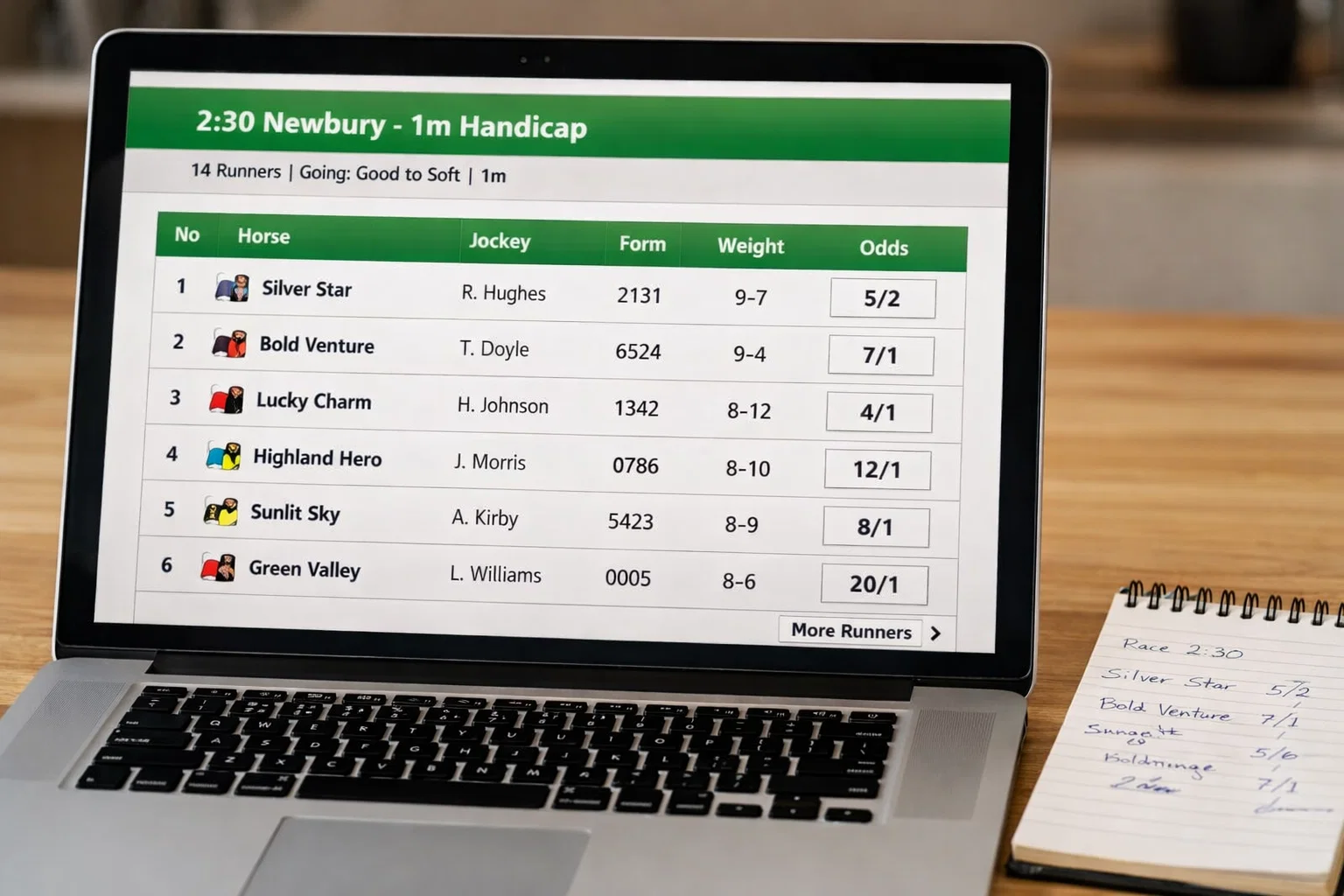
Every racecard begins with a race header. This block carries the essentials: the time of the race, the course name, the distance (in miles and furlongs), the class of the race, the official going description and the total prize money. Some cards also show the race title and sponsorship details. The header is your first filter. If you know a horse prefers soft going and the card reads "Good to Firm," you already have a reason to look more carefully at the form line.
Below the header sit the runner rows — one for each declared horse. Each row typically includes the horse's name and age, the trainer and jockey, the draw (stall number), the weight to be carried, the official rating (if applicable), headgear indicators and the form figures. Some platforms add the owner's name, the sire and dam, the number of days since the horse last ran and the starting price or forecast odds. The density of information in a single runner row is considerable: a 16-runner handicap at Newbury on a Saturday afternoon gives you 16 rows, each containing a dozen or more data points. Britain's 59 active racecourses collectively stage around 1,450 fixtures a year, and every race at every fixture generates a card built on this same template.
The form line — that compressed string of numbers and letters sitting next to each horse's name — is arguably the most scrutinised element. It reads chronologically from left to right, with the most recent result on the far right. A sequence like 2131 tells you the horse finished second, then first, then third, then first again. Letters such as P (pulled up), F (fell) and U (unseated rider) interrupt the numbers with information about incomplete races. The form line is explored in detail later in this guide, but for now, note its position on the card: it is always adjacent to the horse's identity, because it is the first thing experienced readers look at after the name.
The odds column shows where the market stands. On a morning card, these are forecast prices — estimates of where the betting will open. By the time the race is 30 minutes away, live odds from bookmakers and exchanges replace the forecasts. Some cards display a single price (the industry starting price, or SP), while others show a comparison of odds across multiple firms. Movement in this column — a horse shortening from 10/1 to 6/1, or drifting from 3/1 to 5/1 — is itself a data point, reflecting money flowing into or away from a runner.
Finally, most modern racecards include trainer and jockey statistics: the win percentage of the jockey over the last 14 days or the trainer's strike rate at the specific course. These micro-stats were once the preserve of dedicated form students; now they sit on the card for anyone to see. The card tells you not just who is riding, but how well they have been riding lately — and that distinction matters when you are choosing between two horses whose form looks equally strong.
Making Sense of Form Figures
Form is the racecard's shorthand for history. Every horse that has raced in Britain carries a form line — a sequence of numbers and letters that compresses its recent finishing positions into a string you can read at a glance. The system is elegant once you learn it, but opaque if nobody explains it. This section covers the essentials; a full breakdown of every symbol and letter lives in the dedicated form figures guide.
Numbers in the form line represent finishing positions. A "1" means the horse won, a "2" means it finished second, and so on through to "9." The digit "0" represents any finishing position of tenth or worse — not, as some beginners assume, a non-completion. The sequence reads chronologically from left to right, with the most recent run on the far right. So a horse showing 31042 finished third, then first, then tenth-or-worse, then fourth, then second in its last five starts. A hyphen or a forward slash separates the current season's form from the previous season: 31/042 tells you the "31" happened last season and the "042" is this season's work.
Letters interrupt the numerical sequence when something other than a normal finishing position occurred. The most common are P (pulled up — the jockey stopped riding before the finish, usually because the horse was beaten or struggling), F (fell — relevant mainly in jump racing), U (unseated rider) and R (refused to race or refused at an obstacle). Each letter tells a different story. A single P in an otherwise solid form line might signal a bad day; three Ps in succession suggests a deeper problem. A single F in a chaser's record is unfortunate; multiple falls raise questions about jumping technique or confidence.
Other indicators appear alongside the form line rather than within it. The letters C (course winner), D (distance winner) and BF (beaten favourite) are flags that highlight relevant history. A horse marked CD has won at this course over this distance before — a powerful indicator, since some horses genuinely thrive at specific tracks. BF flags a horse that was sent off favourite but failed to win, which can signal either bad luck or a tendency to underperform under market pressure.
Context shapes everything. A "1" in a Class 6 handicap at Wolverhampton on a Monday evening is not the same as a "1" in a Group 2 at York. The form figures do not distinguish between these — the number just says "won." It is the reader's job to check the class, the going, the distance and the quality of opposition. Experienced punters never look at form in isolation; they cross-reference with the race conditions on today's card.
Across all British racing, favourites win approximately 30-35% of races. That means the horse with the best recent form and the shortest odds still loses two times out of three. The form line gives you information, not certainty — and the punter who treats it as a probability tool rather than a crystal ball tends to do better over time. The top three in the betting market collectively win around 65-70% of all races, which tells you that the form data visible on the racecard does, on aggregate, point in the right direction. It just does not point there every time.
Going and Track Conditions
The going is the official description of how the ground is riding on race day, and it appears in the header of every UK racecard. For turf racing — which accounts for the vast majority of British fixtures — the scale runs from Hard (the firmest, rarely seen and generally avoided by clerks of the course) through Firm, Good to Firm, Good, Good to Soft, Soft and finally Heavy. All-weather surfaces use a separate scale: Fast, Standard to Fast, Standard, Standard to Slow, Slow. Each point on the scale changes the physical demands of the race, and with them, the relative chances of every horse in the field.
The measurement is not guesswork. Since 2007, BHA-licensed courses have used the GoingStick — a portable penetrometer that measures the force required to push a probe into the turf. The clerk of the course takes readings at multiple points around the track, averages them, and translates the numbers into the official going description. Readings are published on racecard platforms and updated throughout the day. If overnight rain softens the ground, the going can change between the morning card and the first race. Punters who check the going only once are working with outdated information.
Why does it matter so much? Because some horses are demonstrably better on certain ground. A horse bred for speed, with a high knee action and a preference for a fast surface, may struggle to maintain its stride on heavy ground where each step sinks an extra inch into the turf. Conversely, a staying type with a grinding running style may find firm ground too jarring and prefer the give of softer conditions. The racecard's form line does not always make this explicit, but the combination of form plus going at the time of each run tells the story.
The statistics reinforce the point. According to data from FlatStats.co.uk, favourites on firm ground win 1.14 times more often than on good ground — a meaningful edge in a sport where margins are thin. On soft ground, the favourite win rate dips to 0.95 times the good-ground baseline, and the average winning distance stretches by 41%, from roughly 1.7 lengths to 2.4 lengths. Softer ground does not just slow the race; it amplifies the gap between horses suited to it and horses that are not. For the racecard reader, this means the going description is not decorative — it is a filter that should influence every assessment of form.
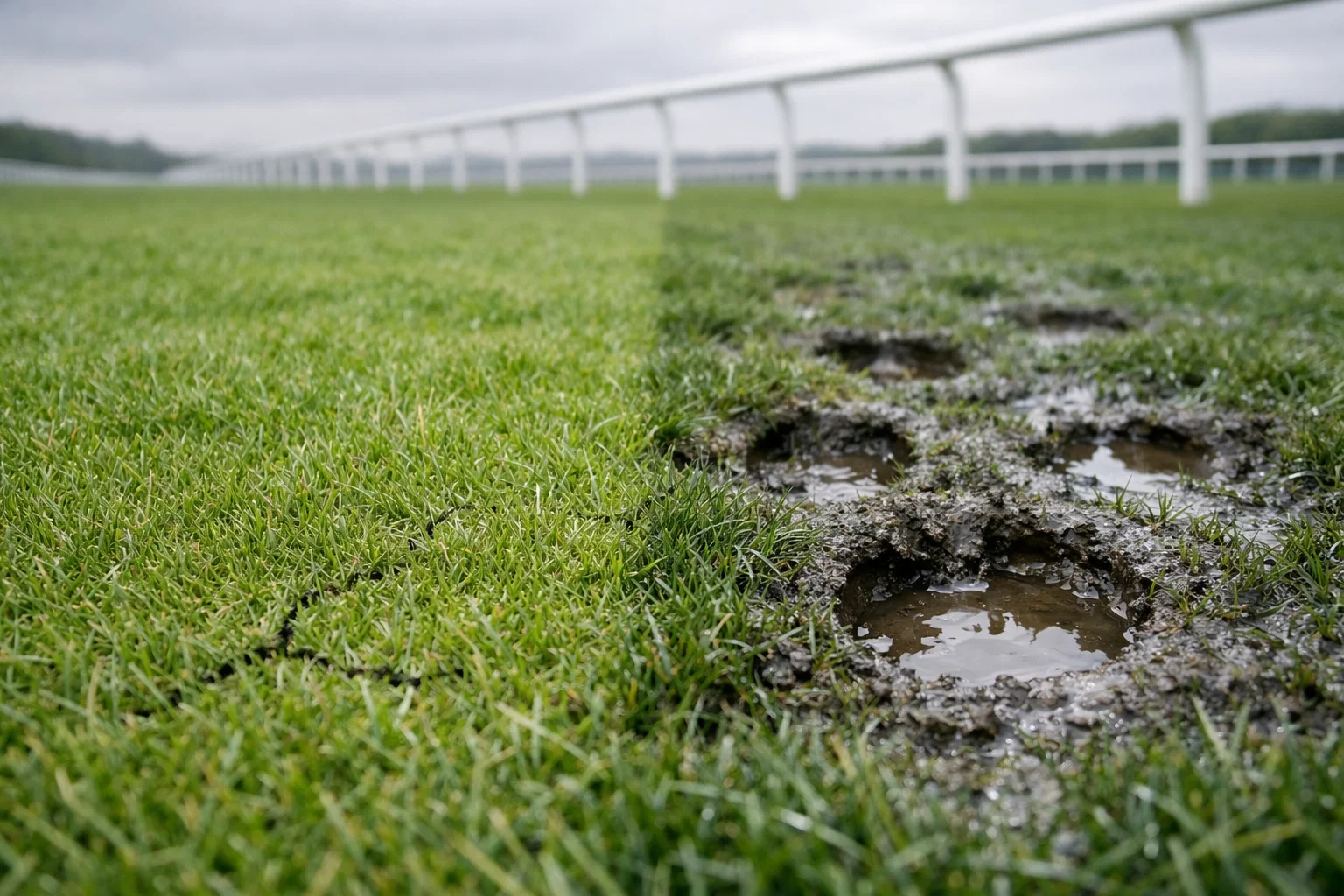
The spring 2026 National Hunt season offers a live example of going's influence. Cheltenham's Festival week in March regularly sees the ground shift from Good to Soft on Tuesday to Soft or Heavy by Friday, transforming the card's competitive dynamics race by race. Horses that looked marginal on the opening-day card become live contenders by Gold Cup afternoon, purely because the ground has turned in their favour. The card tells you the going; the going tells you which form to trust.
Weights and the Handicap System
Every horse on a UK racecard carries a specified weight, shown in the "wt" column in stones and pounds. That weight is not arbitrary. It is the BHA handicapper's attempt to equalise the field — to give every horse a theoretical chance of winning by loading the best performers with more weight and relieving the lesser ones. The weight column is, in effect, the handicapper's opinion of each horse's ability, expressed in pounds of lead packed into a saddle cloth.
The system works through official ratings (OR). Each horse that has run at least three times in handicap-eligible races receives a rating, typically on a scale that ranges from the low 40s (modest performers in the lowest classes) to 120 and above (elite handicappers and Group-class horses). The higher the rating, the more weight the horse carries. In a standard handicap, the top-rated horse carries top weight and every other runner carries proportionally less, with one pound of weight equating to one rating point. If the top weight is rated 95 and carries 10st 0lb, a horse rated 85 carries 9st 4lb. The racecard shows both the weight and (on most platforms) the official rating, so you can see exactly where each horse sits in the handicapper's estimation.
The difference between handicap and non-handicap races is fundamental to reading the card correctly. In non-handicap races — including Group races, Listed races and conditions stakes — weights are determined by age, sex and race conditions, not by individual ratings. A four-year-old carrying 9st 2lb in a Group 1 is carrying that weight because the weight-for-age scale says so, not because a handicapper assessed its ability. In handicaps, the weight is personal. This distinction matters because the competitive dynamics are different: in handicaps, favourites win approximately 26-27% of the time, compared to around 39% in non-handicap races. The handicap system, by design, compresses the field and makes outcomes harder to predict.
Penalties and allowances add further nuance. A horse that has won since the weights were published may be required to carry a penalty — typically 5-7 pounds extra — which is shown on the racecard as an addition to the allocated weight. Conversely, claiming jockeys are entitled to claim a weight allowance based on their experience: a conditional jockey might claim 5 pounds, reducing the weight their horse carries. The racecard notes these adjustments, usually with a small annotation next to the jockey's name. When assessing a runner, the total weight carried — including penalties and after claiming allowances — is the number that matters, not just the base allocation.
For the racecard reader, the weight column answers a specific question: how hard is the handicapper making this horse work? A horse at the top of the weights in a competitive handicap faces a sterner test than one at the bottom, but the top weight is also likely the best horse on pure ability. The tension between talent and burden is what makes handicaps the backbone of British betting — and why the "wt" column deserves as much attention as the form line.
Racecard Abbreviations Quick Reference
Racecards are dense with abbreviations. Some are intuitive; others require a glossary. The table below covers the most common symbols you will encounter on a UK online racecard. This is not exhaustive — the full glossary of horse racing terms runs to over a hundred entries — but it covers the abbreviations that appear on virtually every card.
| Abbreviation | Meaning | Where It Appears |
|---|---|---|
| C | Course winner — the horse has won at this racecourse before | Next to horse's name or form line |
| D | Distance winner — the horse has won over today's distance | Next to horse's name or form line |
| CD | Course and distance winner — has won at this course over this distance | Next to horse's name or form line |
| BF | Beaten favourite — was sent off favourite but did not win | Next to form line |
| OR | Official rating — the BHA handicapper's assessment of ability | Runner information block |
| TS | Topspeed rating — a speed figure from the Racing Post | Form guide section |
| RPR | Racing Post Rating — the Racing Post's performance rating | Form guide section |
| b | Blinkers — eye equipment restricting rearward vision | Headgear column |
| v | Visor — a type of blinker with a slit for partial rear vision | Headgear column |
| t | Tongue tie — a strap securing the tongue to prevent breathing obstruction | Headgear column |
| h | Hood — covers the horse's ears to reduce noise distraction | Headgear column |
| p | Cheekpieces — sheepskin strips attached to the bridle beside the eyes | Headgear column |
| 1 | First-time application — the equipment code followed by a superscript 1 indicates first-time use | Headgear column |
| P | Pulled up — the jockey stopped riding before the finish | Form line |
| F | Fell — the horse fell during the race (jump racing) | Form line |
| U | Unseated rider — the jockey was dislodged | Form line |
| R | Refused — the horse refused to race or refused at an obstacle | Form line |
| S | Slipped up — the horse lost its footing | Form line |
| 0 | Finished 10th or worse | Form line |
A few notes on context. The headgear codes appear in lowercase, while the form-line codes appear in uppercase. This is a deliberate convention. A lowercase "b" next to a horse's name means blinkers; a capital "B" in the form line would mean something else entirely (brought down — another horse's fall causing this horse to fall). First-time headgear — especially first-time blinkers — is one of the most closely watched indicators on any card, because the application of blinkers for the first time can produce a dramatic improvement or a complete disaster, with relatively little middle ground.
The OR and RPR/TS columns occasionally confuse newcomers because they appear to measure the same thing. They do not. The OR is the official handicap rating set by the BHA and determines the weight the horse carries. The RPR and TS are private performance ratings calculated by the Racing Post, reflecting what the horse has actually achieved on the track. A horse with an RPR significantly higher than its OR is potentially "well handicapped" — carrying less weight than its ability warrants. That discrepancy is one of the angles experienced punters look for on every card.
Flat, National Hunt and All-Weather
British racing operates under three distinct codes, and the racecard for each looks subtly different. Understanding which code you are looking at — and what that means for the data on the card — is a prerequisite for reading form accurately. A horse's form on the Flat tells you nothing guaranteed about its prospects over hurdles, and a form line built entirely on all-weather surfaces may not translate to turf.
Flat racing is the summer code, running from April to October on turf (with all-weather fixtures year-round). Races range from five-furlong sprints lasting barely a minute to two-mile-plus staying tests. There are no obstacles. The racecard for a Flat race emphasises speed-related data: draw (stall position), weight carried, official rating and the going. The draw is particularly relevant on tight, turning courses like Chester, where inside stalls offer a significant advantage at sprint distances. Average field sizes on the Flat in 2025 stood at 8.90 runners — down from 9.14 the previous year, reflecting the ongoing decline in the horse population. On Premier Flat racedays, that figure climbs to 11.02, meaning the best cards of the summer carry the deepest, most competitive fields.
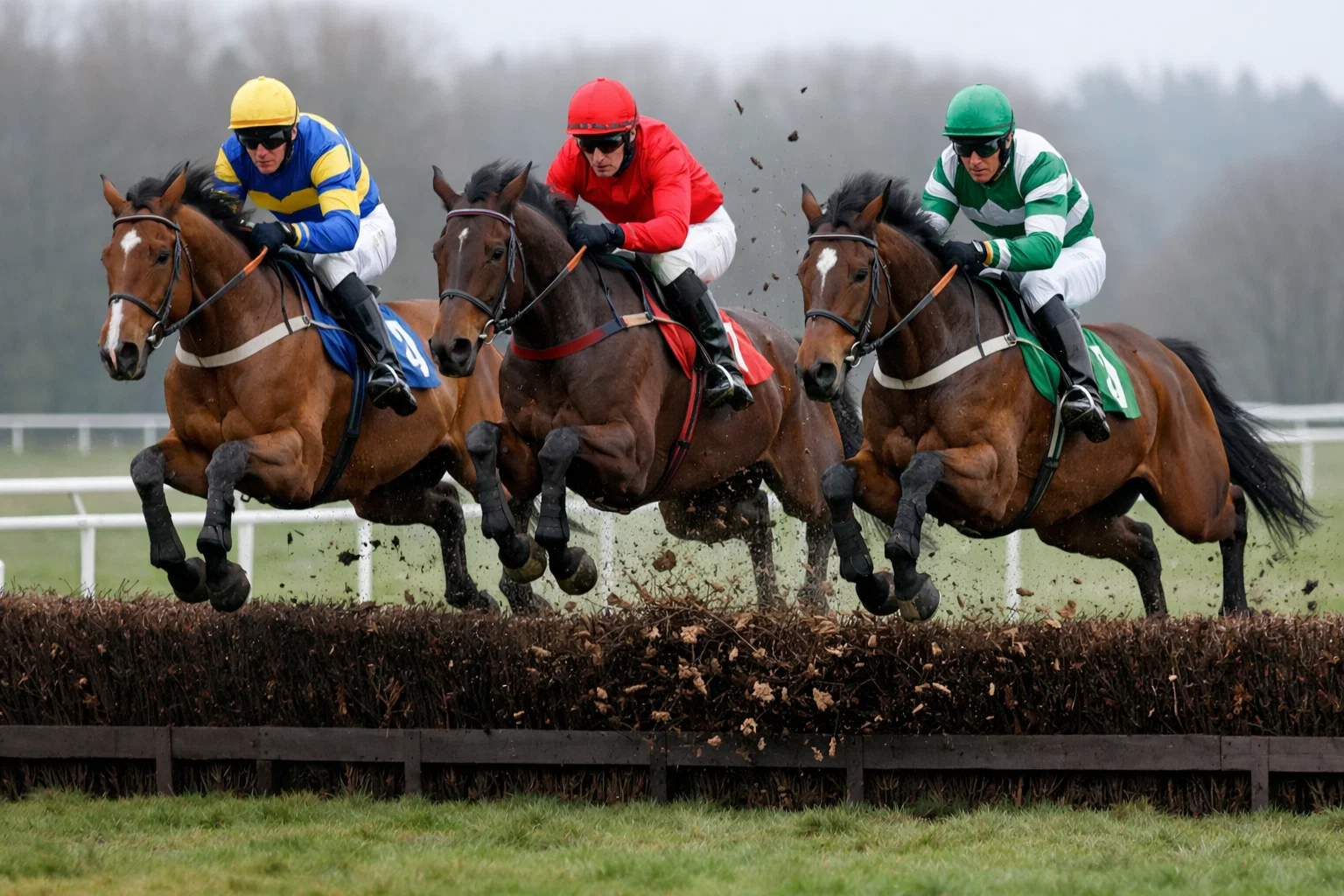
National Hunt (NH) racing — jump racing — runs primarily from October to April. Races are contested over hurdles or steeplechase fences, and the racecard for a jump race includes everything a Flat card does, plus additional information: the type and number of obstacles, the longer distances (typically two miles to four miles and beyond) and the form letters F, U and R, which appear far more often than on the Flat because falls, unseated riders and refusals are inherent to the code. Average field sizes in jump racing fell to 7.84 in 2025, down from 8.49, reflecting both the smaller overall horse population and the physical demands of the sport.
All-weather racing takes place on artificial surfaces — Polytrack (Chelmsford, Kempton, Lingfield), Tapeta (Newcastle, Southwell, Wolverhampton) and historically Fibresand (no longer in use at any British course). The racecard uses its own going scale (Fast through to Slow) and shows the surface type. Form on all-weather surfaces is its own discipline: some horses run consistently well on artificial ground and poorly on turf, while others show the reverse. Cross-referencing the surface with the form line is essential when a horse that has been running all winter on Polytrack appears on a turf card in April.
The practical implication for the racecard reader is straightforward: check the code before you check the form. A form figure of "1" earned in a 2m4f novice hurdle at Wetherby is irrelevant if the horse is now entered in a 6f handicap on the all-weather at Wolverhampton. It sounds obvious, but the compressed nature of form figures can make it easy to miss. The card tells you the race conditions; the form line tells you the horse's history. Your job is to check whether the two are compatible.
From Racecard to Bet
The racecard is an informational document, not a betting slip — but the distance between the two is short. Every piece of data on the card exists, in part, because someone is going to use it to decide where to put their money. Online betting on horse racing generated a gross gaming yield of £766.7 million in the year to March 2025, making it the second-largest GGY category in British gambling after football. Behind every pound of that figure is a punter who, at some point, looked at a racecard.
The odds column on the card is the market's collective judgement. Before the race, forecast odds give an estimate of where each horse will be priced. As the off approaches, those forecasts are replaced by live odds from bookmakers and, on exchanges like Betfair, by the prices that punters themselves are willing to offer and accept. The starting price (SP) — the official odds at the moment the race begins — is compiled by an independent panel of assessors at the racecourse. The SP is the benchmark used for settling most bets placed on-course and many placed online under "best odds guaranteed" terms, which means the bookmaker will pay the higher of the price you took and the SP.
Reading the odds column is partly about price and partly about movement. A horse that opens at 8/1 in the morning but is 4/1 by the time betting starts in earnest has attracted significant money. That shortening may reflect stable confidence, a positive workout report, a change in going that suits the horse or simply a well-known tipster recommending it. Conversely, a horse that drifts from 5/2 to 7/2 may be doing so because an expected jockey booking fell through, or because inside information suggests the horse is not at peak fitness. The card shows you the price; interpreting the price requires context.
"2024's annual attendance figures demonstrate a year of consolidation, which is particularly encouraging considering the sport is in the midst of undertaking significant measures to enhance the product on offer" — David Armstrong, Chief Executive, Racecourse Association. That consolidation matters to the racecard punter because it signals a sport investing in competitive quality. Higher-quality racing means form is more reliable, which means the data on the card rewards careful reading.
The practical workflow from racecard to bet follows a logical sequence: assess the race conditions (class, distance, going), then filter runners by form achieved under similar conditions. Check the draw if the course makes it relevant. Note the weight and whether any runner looks well-handicapped. Finally, look at the odds and decide whether the price reflects your assessment. If a horse ticks multiple boxes and the odds are longer than you think they should be, that is what experienced punters call value. If the horse ticks every box but is odds-on, the market already knows everything you know.
None of this guarantees a winner. The racecard equips you with information; the outcome depends on variables the card cannot capture — the horse's mood, the jockey's split-second decision at the two-furlong pole, a gap that opens on the rail. What the card does is reduce the randomness. Over enough races, that distinction is worth real money.
Where to Find UK Racecards Online
The good news is that you do not need to pay for racecard access. Several platforms publish full UK racecards for every meeting, updated from overnight declarations through to the off. The range of options reflects the commercial reality of an industry that attracted 4.8 million visitors to racecourses in 2024 and millions more engaging digitally. Here is a neutral overview of the main sources.
Racing Post is the industry standard. Its racecard includes form, trainer and jockey stats, speed ratings (RPR and Topspeed), spotlight previews from in-house analysts and verdict picks. The depth of data is unmatched among free platforms, though some features — detailed historical form, replays and advanced filters — sit behind a subscription. For the racecard reader who wants everything in one place, the Racing Post card is the benchmark.
Sky Sports Racing provides racecards alongside live broadcasts of UK and Irish meetings. The card is clean, relatively simple and integrates with the broadcaster's tipping content. It is a good option for punters who want a card that sits alongside a televised meeting without the data density of the Racing Post.
Sporting Life offers a free racecard with form, odds comparison from multiple bookmakers and editorial tips. Its presentation is accessible, with colour-coded form indicators and a layout designed for quick scanning rather than deep analysis. For newcomers who find the Racing Post card overwhelming, Sporting Life is a sensible starting point.
At The Races publishes racecards with a focus on betting integration, including live odds and bookmaker offers. The site also provides printable racecard versions — a format that retains a loyal following among racegoers who prefer a physical card to annotate at the course.
Betfair and other exchange platforms show a different kind of racecard, one oriented around the exchange market rather than traditional bookmaker odds. The Betfair card shows the back and lay prices, the volume of money matched on each runner and the price history. For punters interested in market dynamics — where the money is going, not just where the form points — the exchange card adds a layer of information that traditional cards do not.

"I'm pleased to see the 2025 annual attendance figures confirm what anecdotal and visual evidence suggested across the year; racecourse attendance has been growing" — Kevin Walsh, Racing Director, RCA. That growth translates into growing demand for digital racecards: more people at the course means more people checking their phones for the latest going update, the final declarations and the odds movements. The platforms that serve them best are the ones that update fastest and present the data most clearly.
A practical note: no single platform is perfect. The Racing Post has the deepest data but the busiest interface. Sporting Life is cleaner but less analytical. The best approach is to settle on one primary source for daily use and check a second — particularly an exchange card — when something does not add up.
The Bigger Picture: UK Racing's Evolving Landscape
A racecard is a snapshot of a single race, but the industry behind it is in constant motion. Understanding the trends shaping British racing in 2026 adds context to every card you read — because changes in the horse population, the fixture list and the funding model all affect the quality and competitiveness of the fields you are analysing.
The most significant trend is the declining horse population. The number of horses in training in Britain fell to 21,728 in 2025, a drop of 2.3% on the previous year and a continuation of a trend that has seen annual shrinkage of approximately 1.5% since 2022. Beneath that headline figure, the breeding pipeline tells a starker story: British breeders produced just 4,015 foals in 2025, the lowest total in twenty years, down from 4,198 in 2024 and 4,510 in 2023. Fewer foals today means fewer racehorses in three to four years, and BHA modelling projects that the number of races staged in Britain by 2027 will be 6-7% lower than the 2024 level.
What does this mean for the racecard? Smaller fields, for one. As the horse population contracts, average field sizes have fallen across both codes — a trend visible in the 2025/26 season's cards week after week. Fewer runners per race changes the betting dynamics: shorter-priced favourites become more reliable, draw bias loses some of its statistical power in smaller fields, and the racecard becomes a more manageable document for the reader. Whether that is a positive development depends on your perspective. For the punter, smaller fields mean fewer unknowns. For the sport, they mean less spectacle and less betting turnover.
On the financial side, the Horserace Betting Levy reached £108.9 million in 2024/25 — a record since the levy's reform in 2017 — despite overall betting turnover declining for the third consecutive year. The paradox is explained by the levy being calculated on gross profits, not turnover: bookmakers' margins have held up even as the total volume of bets has fallen. That levy money flows into prize funds, integrity services, horse welfare and veterinary research, underpinning the infrastructure that makes every racecard possible.
The BHA's response has been strategic consolidation. Premier Racedays — the flagship fixtures — received increased investment in 2024, with prize money on those days rising by £7.33 million, while Core fixture prize money fell by £3.64 million. The result is a two-tier system: bigger days are getting bigger and smaller days are getting leaner. For the racecard reader, the practical implication is that a Saturday card at a Premier meeting and a Tuesday card at a Core fixture are increasingly different products in terms of field quality, form depth and market reliability.
None of this diminishes the racecard's value. If anything, it increases it. In a sport where the landscape is shifting, the card remains the constant — the one document that tells you exactly what is happening in this race, on this day, at this course. The trends are the backdrop; the card is the foreground.
Frequently Asked Questions
What is a racecard and what information does it contain?
A racecard is the official document published for every race at a British racecourse. It contains the confirmed runners and riders, each horse's recent form figures, the weight carried, the official rating (for handicaps), the draw (stall position), trainer and jockey names and statistics, headgear indicators, and the conditions of the race — including the distance, class, going description and prize money. On digital platforms, the card also typically shows live or forecast odds, speed ratings such as RPR and Topspeed, and flags for course winners (C), distance winners (D) and beaten favourites (BF). The card is updated as declarations are confirmed: overnight entries become final declarations on the morning of the race, and any non-runners, jockey changes or equipment additions are reflected before the off.
How do you read form figures on a racecard?
Form figures read chronologically from left to right, with the most recent result on the far right. Numbers 1 through 9 represent finishing positions, and 0 means the horse finished tenth or worse. Letters indicate non-standard outcomes: P (pulled up), F (fell), U (unseated rider), R (refused) and S (slipped up). A forward slash or hyphen separates the current season's form from the previous season. So a form line of 21/3104 tells you the horse finished second and first last season, then third, first, tenth-or-worse and fourth this season. Context matters: a "1" in a Class 6 race is not equivalent to a "1" in a Group race, so always cross-reference the form figures with the class and conditions of each race in which they were recorded.
What do the abbreviations C, D, BF and OR mean on a racecard?
C stands for course winner, meaning the horse has previously won at the racecourse where today's race is being held. D stands for distance winner, indicating a previous win over the same trip. CD combines both — the horse has won at this course over this distance. BF marks a beaten favourite: the horse was sent off as the market leader but did not win. OR is the official rating assigned by the BHA handicapper, which determines the weight the horse carries in handicap races. These abbreviations are among the most useful quick-reference indicators on the card. A horse showing CD at a track with a distinctive configuration — Chester's tight left-hand loop, for example — has proven it handles the specific demands of that course and distance, which is a stronger signal than generic form at other venues.
Responsible Gambling
Horse racing is a spectator sport first and a betting medium second. If you choose to bet, do so within limits you have set in advance — and stick to them. Every licensed UK bookmaker is required to offer deposit limits, loss limits, time-outs and self-exclusion tools. Use them. They exist because the industry recognises that betting, for a minority of participants, can become harmful.
If you feel that your gambling is no longer enjoyable, or if someone close to you has raised concerns, help is available. GamCare provides free advice, support and counselling for anyone affected by problem gambling. BeGambleAware offers information and a national helpline. GAMSTOP allows you to self-exclude from all UK-licensed online gambling operators with a single registration. These services are confidential, free and available around the clock.
The racecard is a tool for informed decision-making. It should never feel like a source of pressure.
