
Best Horse Racing Apps UK: Comparing Mobile Racecard Access
Best Horse Racing Betting Sites – Bet on Horse Racing in 2026
Loading...
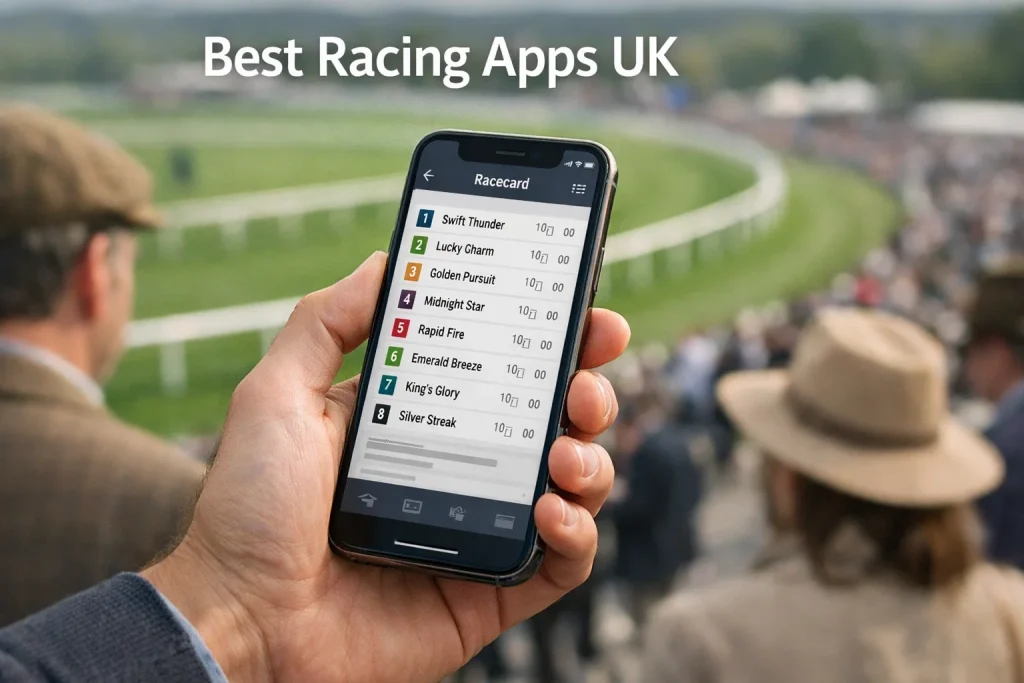
Over five million people visited British racecourses in 2026 — the first time the figure exceeded that threshold since 2019 — and the vast majority checked racecards on their phones either before arriving or while standing trackside. The best horse racing app UK punters use is the one that delivers the racecard data they need, in a format they can read quickly, without charging for basic information they can get elsewhere for free.
Mobile racecard access has become the default way most people engage with racing data. The printed card and the desktop website still exist, but the phone is where the card lives for anyone at the course, on the commute, or checking runners during a lunch break. The choice of app matters because the same underlying data — runners, form, odds, going — is presented differently on every platform, and the differences in layout, depth and cost affect how effectively you can read the card.
This guide compares the major racing apps available in the UK, outlines what you can access for free versus what requires a subscription, and suggests which app suits which type of user.
Key Apps Compared — Racing Post, Sky Sports, Sporting Life, At The Races, GG
Racing Post is the most data-rich racing app available in the UK. Its racecard includes form lines, official ratings, RPR, topspeed figures, trainer and jockey statistics, spotlight comments from Racing Post’s editorial team, and a price comparison grid covering all major bookmakers. The app also provides full result cards, race replays and a form database that allows you to research any horse’s career history. The depth is unmatched, and for serious form students, Racing Post is the industry benchmark. The trade-off is cost: full access requires a subscription, and the free tier limits form data significantly. The interface is functional but dense — on a phone screen, the volume of data can feel cramped, particularly for users accustomed to cleaner layouts.
Sky Sports Racing (incorporating the former At The Races platform) provides free racecards with form, going, draw and odds data. The app integrates with Sky Sports Racing’s live broadcast, which means you can watch the race and view the card on the same platform. The form guide includes race-by-race comments, and the odds display covers the major bookmakers. The layout is cleaner than Racing Post’s, with a more visual approach to presenting runner information. For punters who value integration between racecard data and live coverage, this app shows you both without switching platforms.
Sporting Life offers free racecards with an editorial emphasis. Each race includes tips, verdicts and a short written analysis from Sporting Life’s racing team, positioned alongside the standard data columns. The app is well suited to punters who want a professional opinion cross-referenced with the card — you can read the tip, check it against the form and going data in the same view, and decide whether to follow it. The odds column is less comprehensive than Racing Post’s but covers the main operators. The free tier is generous, with most racecard features available without a subscription.
GG.co.uk provides free racecards with the lightest interface of any major racing app. The data covers the essentials — form, odds, going, draw and basic trainer/jockey stats — without the editorial layer that Sporting Life adds or the statistical depth that Racing Post provides. For casual racegoers who want to check today’s card on a phone at the course without navigating a complex interface, GG delivers efficiency. The app loads quickly, the layout is uncluttered, and the information is sufficient for making a selection without feeling overwhelmed.
Betfair and other exchange-based apps present racecards from a market perspective rather than a form perspective. The Betfair app displays exchange odds, traded volume and price graphs alongside basic runner data. For punters who analyse the market as their primary tool — using price movements, liquidity and exchange patterns to identify value — this app shows you the betting landscape in more detail than any bookmaker-based card. The form data is thinner than Racing Post’s, but the pricing data is richer.
Free vs Paid Features — What You Get Without a Subscription
The core racecard data — runners, form lines, odds, going, draw — is available for free on every major racing app. No UK punter needs to pay for basic racecard access, and this is worth emphasising because the perception that you need a subscription to read a card is both widespread and incorrect.
What the free tier provides across most apps: today’s confirmed runners, recent form figures (typically the last six runs), current odds from major bookmakers, the going description, draw positions, official ratings, and basic trainer/jockey information. This is enough data to make an informed selection for any race on the card.
What paid subscriptions add: deeper form analysis (full career histories, going breakdowns, course records), editorial comments and spotlight verdicts, race replays, advanced statistical overlays (speed ratings, pace maps, tissue prices), and in some cases, ad-free browsing. Racing Post’s subscription is the most expensive and the most comprehensive; Sporting Life and Sky Sports Racing offer premium tiers that sit between Racing Post’s depth and GG’s simplicity.
The question of whether to pay depends on how seriously you approach form analysis. A casual racegoer attending three or four meetings a year does not need a Racing Post subscription — the free data on any platform is sufficient. A regular punter who bets on racing weekly and treats form study as part of the experience will find that a subscription pays for itself in the quality of data available. Saturday — the busiest day for both racegoers and app users, drawing an average attendance of 6,480 per meeting in 2026 — is when the difference between free and paid features is most apparent, because the premium data helps you navigate multiple competitive cards simultaneously.
Choosing the Right App for Your Needs
The best app for you depends on what kind of racing user you are, and no single app is optimal for everyone.
If you are a beginner attending your first race meeting, start with GG or the free tier of Sporting Life. Both provide the essential racecard data in a clean, approachable format, and Sporting Life’s tips give you a professional opinion alongside the numbers. You do not need a subscription, a form database or speed ratings on your first day — you need runners, odds and a clear layout. This app shows you the basics without burying you in data.
If you are a form student who enjoys the analytical process of studying cards and tracking horses over time, Racing Post is the standard. The depth of data — full career form, going records, sectional times, trainer and jockey statistics — supports the kind of multi-angle analysis that serious form readers rely on. The subscription cost is justified if form study is a regular part of your racing engagement.
If you are a market-focused punter who uses odds movements, exchange prices and traded volumes as primary indicators, Betfair’s app is the most appropriate tool. The racecard data is secondary to the pricing data, and the app is designed around the market rather than the form book. For punters who believe the price is the best indicator of a horse’s chance, this app shows you the market’s real-time opinion in more detail than any competitor.
If you want one app for everything — racecard, live coverage, results and odds — Sky Sports Racing offers the most integrated experience, particularly if you already have access to the broadcast through a Sky subscription. The card is solid, the coverage is live, and the integration between watching and reading is seamless.
Whichever app you choose, the racecard data underneath is the same. The horses, the form, the going and the odds do not change between platforms. What changes is how that data is presented, and the best app is the one that presents it in the way you find most readable, most quickly, on the screen you are holding.